Documentarian Reid Davenport depicts the day to day, living with a disability. In I didn’t See You There, Davenport offers his voice so it can be heard. He thrives for social change and that’s what he aspires to do. By creating a platform for himself, he has created a space where people can recognize his challenges and how he overcomes them. All he wants is to be viewed as a person just like everyone else. The documentary reinforces location and what effects it has on his life. The majority of the film takes place in the city of Oakland. Originally from Connecticut, he has gained an incredible amount of independence. Living in the city has its own pros and cons, however it is more accessible than many places. He mentions that Oakland is an ethical purgatory in which he is able to live here because of the freedom it provides him. Although, it only gives him so much freedom, compared to Connecticut it is a huge upgrade. In the city of Oakland, many people take advantage of the accessibility the city has to offer. At one point in the film, there is a car blocking the ramp to the crosswalk. The people loading up that car take quite a while and never seem to acknowledge Davenport. He then has to advocate for himself and make them aware that he needs to use the ramp in order to cross the street. This is just one of many examples he has to face almost everyday. Davenport has to adjust his way of living to accumulate with the rest of society.
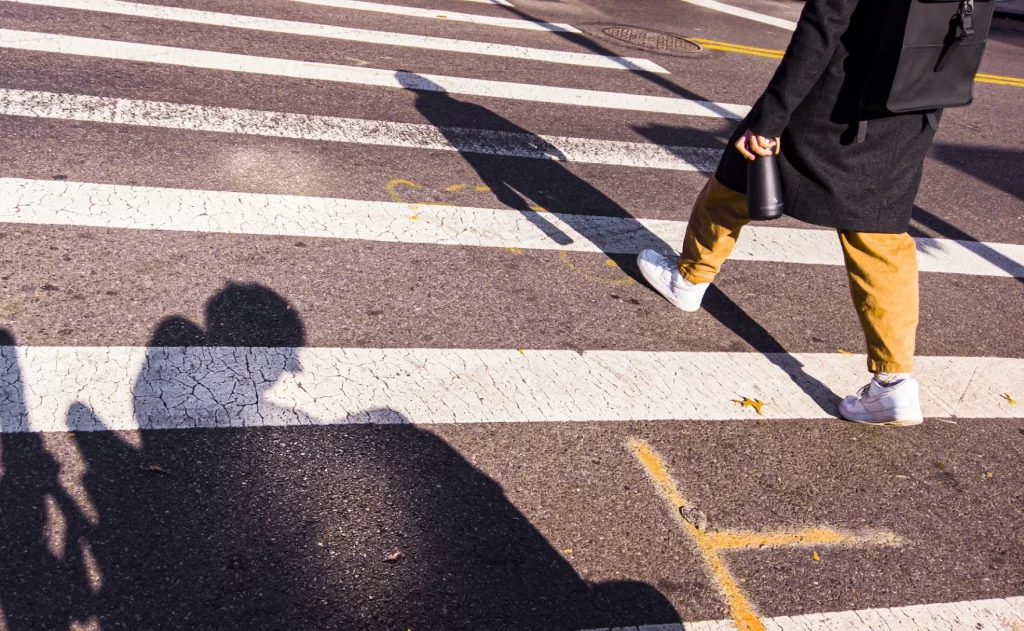
The idea of location in terms of Robert Coles, has multiple interpretations. Oftentimes it is viewed as a physical place. While this is true, there are several interpretations. Location is what makes up intersectionality within a person. From understanding the many identities a person can have, it shows that each and every individual experiences the world differently thanks to their identities. In Davenport’s case, he uses his identity to show his audience about how he experiences life. For example, throughout the course of the film, Davenport films the entire documentary from the view of his wheelchair. Using his perspective on how he physically views the world creates such an impactful statement. He shows his audience the struggles he faces on a day to day basis. From these viewpoints, Davenport frequently would point the camera to the ground. At one point, while facing the camera down to the ground, his shadow was in frame and showed his shadow of him sitting in the wheelchair. Without actually seeing Davenport, it helped put things into perspective of what his life is like. It felt even more eye-catching with the fact that for most of the documentary, he rarely made an appearance. It comes to show that a day in the life as a differently abled person is vastly different compared to someone who is able bodied.
Overall, the documentary expresses a unique perspective by setting the camera to the wheelchair. While the documentary is bound to the wheelchair for the entire film, it puts things into perspective in which after the documentary Davenport still has to rely on his wheelchair. Meanwhile a large portion of his audience has the freedom of movement. From Robert Coles’s concept of location, Davenport’s implication to the film creates a better understanding towards the audience.
Leave a Reply